




Nigerian politics is highly dynamic, and what many once considered a desperate or unattractive venture has now become increasingly embraced by a significant number of citizens.
Perhaps, the surge in political participation is driven by the country’s prevailing challenges – economic hardship, currency instability, a struggling healthcare system, inadequate welfare for citizens, and worsening insecurity resulting from poor governance and ineffective leadership.
Observers believe these realities have inspired many Nigerians to take responsibility by contesting for public offices, with the hope of contributing to national development through sound policies and quality legislation.
Interestingly, a large number of those who have recently shown interest in elective positions are young people with little or no prior political background, grassroots structures, or political experience.
State Reporters gathered that many of the current aspirants previously built their profiles as social media commentators, online activists, content creators, and film actors, and other creative crafts.
While this growing interest is commendable and beneficial for the nation’s future, it is important to distinguish politics from other professions. Successful politics requires a deep understanding of the language, culture, and aspirations of the people. It also demands strong grassroots networks and functional political structures capable of mobilising support across communities.
Although online visibility and media influence can enhance a political process, they represent only one aspect of electoral success. In reality, grassroots mobilisation and physical engagement account for the greater share of political victories. Many internet users, despite being active online, may not even have voters cards or participate directly in elections, while others engage primarily to generate online traffic for commercial/financial purposes.
The Nigeria Democratic Congress (NDC) primaries held on May 29, 2026, served as a practical test for aspirants across the country. While some emerged victorious in their respective states, federal constituencies, and senatorial districts, others who did not secure victories gained valuable political experience that will undoubtedly prepare them for future opportunities.
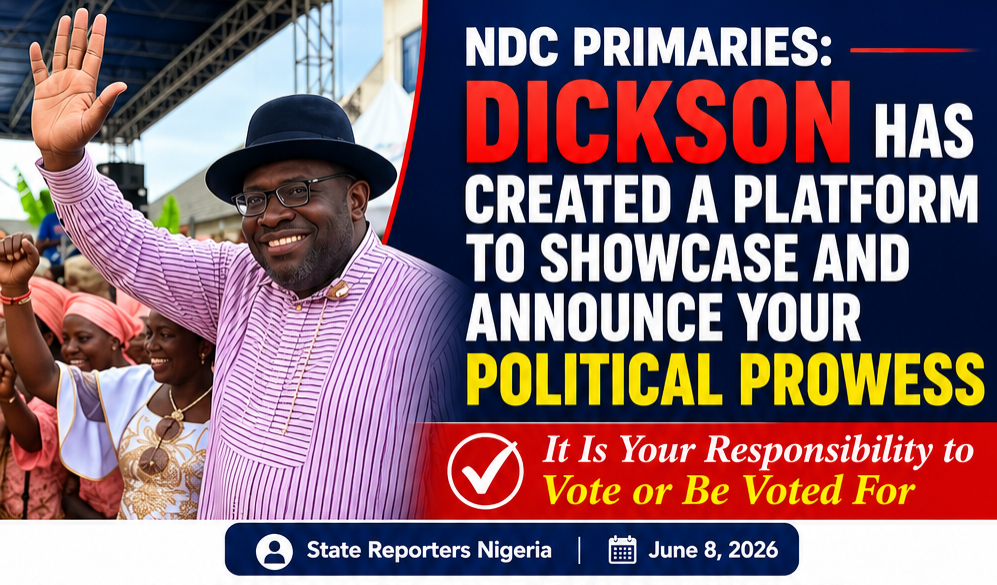
As the National Executive Council (NEC) of the NDC prepares to announce the party’s official flagbearers, one important reality continues to resonate among Nigerians: Senator Henry Seriake Dickson has used the NDC platform to prepare and introduce many Nigerians to greater political opportunities.
He demonstrated remarkable commitment by encouraging broad participation and celebrating the willingness of young Nigerians to seek for leadership positions through the party. More significantly, he worked with the party’s national leadership to reduce the cost of expression of interest forms for youths, making political participation more accessible and affordable.
This singular act reflects Senator Dickson’s genuine commitment to integrating young people into the nation’s leadership process.
As discussions continue on his contributions toward bringing government closer to the youths, one fact remains evident: having consistently advocated for fairness and democratic principles (even in the face of political intimidation at the National Assembly), it would have been inconsistent for him to openly favour one aspirant over another during the party’s internal primaries.
Indeed, despite possessing the political influence and authority to endorse preferred candidates, Senator Dickson insisted on providing a level playing ground and ensuring a free, fair, credible, and transparent democratic process. If there had been any intention to interfere, Sagbama Constituency 1 in Bayelsa State, his immediate constituency would arguably have been the easiest place to exercise such influence. Yet, he maintained neutrality and honoured his commitment to internal democracy, just as he did nationwide.
Now that party leaders and stakeholders have commenced reconciliation efforts aimed at strengthening unity ahead of the official declaration of candidates, many Nigerians who anticipate a better future through the proposed Obi–Kwankwaso joint ticket are calling on all aspirants on the NDC platform to regard the May 29 primaries as a family affair.
The real struggle, they argue, is not among Nigerians themselves but against bad governance and the collective resolve to build a better nation in 2027.
